
What is the Meaning of Flexographic Printing? Guide to All Queries

Flexographic printing is often called flexo printing. It is a modern printing technique widely used in the packaging and labeling industries. This rotary printing involves flexible plates which are used to transfer ink onto various substrates. 

Flexographic printing began in Liverpool in 1890 with Bibby, Baron, and Sons’ water-based ink press, dubbed “Bibby’s Folly” due to smearing. Early 1900s European presses used rubber plates and aniline oil-based inks called “aniline printing” or “Gummidruck”. In Germany where the process originated and still retains that name. It was widely used in U.S. food packaging in the early 20th century until the FDA banned aniline dyes in the 1940s causing sales to drop despite FDA reapproval in 1949. 

The flexographic process was renamed in 1951 after an industry poll and since 1990, advances like photopolymer plates, digital direct-to-plate systems, laser-etched anilox rolls, and chambered ink systems have enabled near-lithographic print quality with improved color and tonal reproduction. In this article, we’ll explore the key elements of flexo printing.

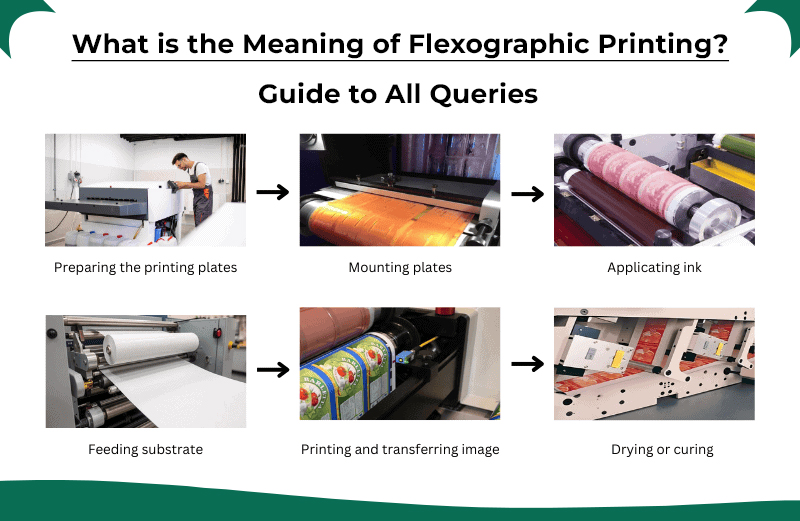
Process of Flexographic Printing in Steps

The flexographic printing process may sound technical. Here’s how it works step by step:

First preparing the printing plates is fundamental. These plates are made from resilient rubber or flexible photopolymer materials. Each plate corresponds to a specific color in the design, typically separated into at least four process colors (CMYK). These plates are essential to accurately transfer the image or text onto the substrate.

Next is plate mounting where each prepared plate is securely fitted onto a press cylinder. Accurate alignment (register) of each plate is essential for color precision and image sharpness as even slight misplacement will cause color shifts and blurring.

The ink application stage uses a system of ink chambers, rubber rollers, and specially designed anilox rollers. Anilox rollers have microscopic engraved cells that meter out a precise volume of ink ensuring consistent and uniform ink transfer onto the plate surface. This will result in sharp and vibrant prints.

Following this the substrate feeding system introduces the printing material usually paper or plastic film in roll form into the press. The substrate is guided through the press using tension-controlled rollers.

During the printing and image transfer simply the inked plates press against the substrate with calibrated pressure. This pressure enables efficient ink transfer producing detailed images ideal for high-resolution printing on various materials. Finally then the ink is fixed by drying or curing the print. 

This cycle repeats at high speed, allowing mass production with consistent quality.

Inks Used in Flexographic Printing for Better Results

Modern flexographic printing machines are capable of handling multiple colors and substrates. Different products demand different ink properties. Commonly used inks include:

  • Water-based inks are considered ideal for paper and cardboard packaging.
  • Solvent-based inks are suitable for plastic films, foils and other non-porous materials.
  • UV-curable inks provide sharp quality and quick drying with UV light.

This flexibility makes flexo printing adaptable across industries.

Substrates Used in Flexographic Printing for a Unique Look

Flexographic printing works on a wide variety of substrates which is why it’s so popular. Some of the common substrates include:

  • Paper and cardboard
  • Plastic films like polyethylene and polypropylene
  • Metallic foils
  • Corrugated boards
  • Self-adhesive labels

This broad compatibility allows industries to use one printing method across different packaging types.
Advantages and Drawbacks of Printing with Flexography

The flexo printing process has certain benefits and drawbacks.

Advantages of Flexo PrintingDisadvantages of Flexo Printing
High-speed productionPlate creation and press setup can be expensive
Works on many substrates (paper, plastic, etc.)Not ideal for fine details or photographic images
Cost-effective for large volumesPlates degrade over time and need replacement
Quick-drying inks that help speed up production and reduce smudgingMaintaining exact color consistency is challenging
Ideal for packaging that requires handling and storage

Overview of Flexographic Printing Press Operation

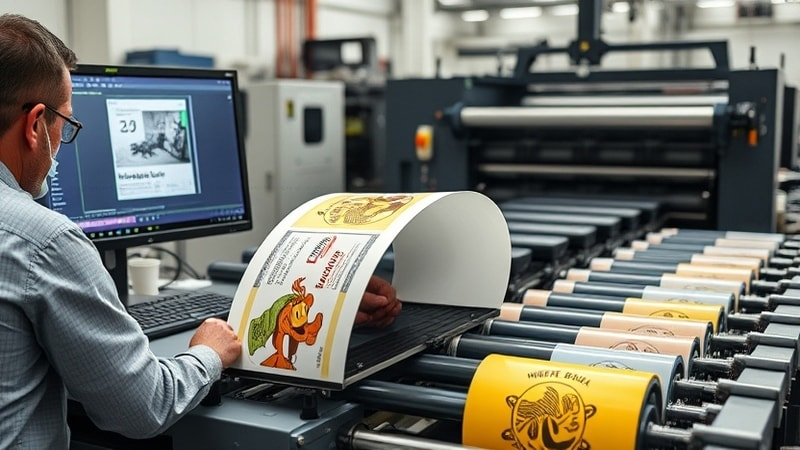
A flexographic printing press uses flexible plates and rollers. It operates like a high-speed stamp capable of printing up to 2,000 feet per minute.

Five main types of flexo presses are categorized by their design and applications:

Stack Press: Vertical stacked decks print on both sides of the material in a single pass; common for flexible materials.

Central Impression (CI): It simply features a large central impression cylinder with printing units arranged around it. Moreover it offers precise registration and high-quality printing. Ideal for flexible packaging.

In-Line Press: In this the decks are aligned horizontally in a straight line. It is suitable for heavier substrates like corrugated cardboard and allows additional finishing processes.

Wide-Web Press: These presses are designed for large-scale printing on wide rolls over 18–20 inches. It is commonly used for flexible packaging.

Narrow-Web Press: These presses are initially for label printing. It is typically under 10 inches wide and has now extended to 20 inches for short runs in packaging like bottle wraps and small pouches.

These types vary in configuration to cater to different substrates, print quality needs, and production volumes.

What is the Difference Between Digital Printing and Flexo Printing?

The debate of flexographic printing vs digital printing is common in packaging. Here are the key differences:

  • Flexographic Printing uses plates and is ideal for bulk production, fast, and cost-effective for high volumes.
  • Digital Printing uses no plates and is perfect for small runs. Plus it offers better detail and variable data printing. But it can be more expensive for large volumes.

Flexographic Printing vs Offset Printing Difference

A common comparison is flexographic printing vs offset printing. Offset printing uses metal plates and transfers ink through a blanket before reaching the substrate. Flexo, on the other hand, uses flexible plates and prints directly.

  • Flexographic Printing is best for packaging, labels, films, and flexible materials.
  • Offset Printing is best for books, magazines, newspapers, and fine-quality graphics.

Both methods have their place but flexography is unmatched in packaging and product labeling.

Conclusion

Flexographic printing is one of the most reliable and efficient printing methods. And especially in the packaging industry it serves its unique role. With its ability to print on diverse substrates at a fast production speed, it has become the backbone of modern packaging solutions. 
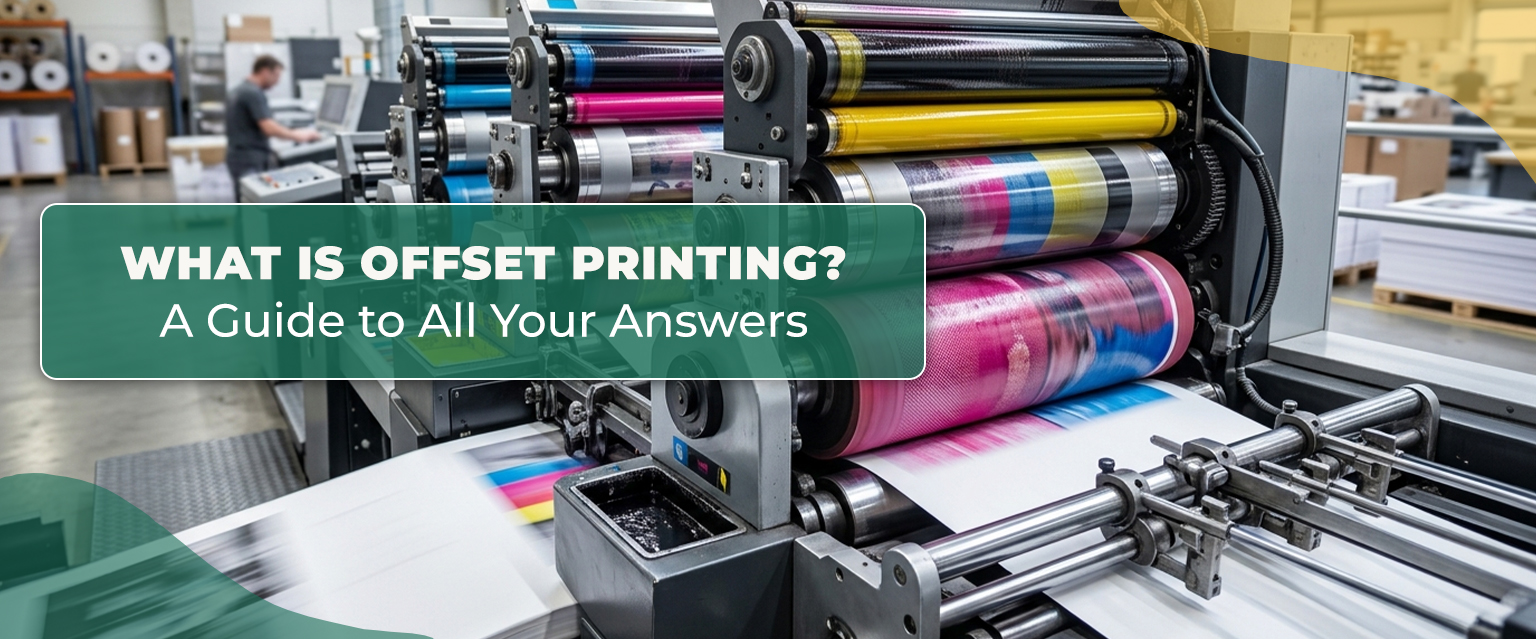
What is Offset Printing? A Guide to All Your Answers

Offset printing is a planographic printing technique where an inked image is transferred from a plate to a rubber blanket cylinder, and then “offset” onto a printing surface like paper, metal, or cloth.

If you’ve ever picked up a newspaper, magazine, or brochure there are chances that you’ve seen the results of offset printing. It’s one of the most popular and widely used printing methods in the world, including here in Canada.

But how did the trend go too real in Canada? Offset printing in Canada became prominent in the mid-20th century. In the 1950s, offset printing started to significantly shape Canadian publishing, allowing for faster, more efficient production and higher-quality books, newspapers, and catalogues.

In this blog, we will delve into some of the details about the offset printing options.

What is Offset Printing?

Offset printing is a printing technique where an image is first transferred. It is transferred from a metal plate to a rubber blanket and then onto paper. It’s called offset because the ink doesn’t go directly from the plate to the paper. It makes a stop at the rubber blanket first. This method is especially useful for printing large volumes quickly and with high quality.

How Does Offset Printing Work? Steps to Ensure Clean Printing Procedure

The process starts with a flat printing plate. This plate contains the image that needs to be printed. Here’s a step-by-step overview:

  1. Plates are prepared: First, the plates are constructed with accuracy. Each printing plate is created for one colour such as cyan, magenta, yellow, or black (CMYK).
  2. Ink and water are applied: Then after that, the water sticks to the blank areas (non-image parts), while ink sticks to the image areas.
  3. Image is transferred: After that, the plate transfers the inked image to a rubber blanket.
  4. Paper gets printed: Then at last, the rubber blanket presses the inked image onto the paper.

Then ensure the system is stable and accurate as you must see on the screen.

Compliance Standards and Regulations

Before the final product, make sure to also comply with regulations for the industry. The industry often relies on standards like ISO 12647-2 for process control and colour quality consistency. The Standards Council of Canada through the Canadian General Standards Board also sets standards for materials like printing inks for offset presses.

Types of Offset Printing Options

If you are a business owner or looking for packaging printers then you must go through the various variations in offset printing. There are two main types of offset printing such as

  • Sheet-fed where individual sheets are fed into the machine. 
  • Web-fed where large rolls of paper run continuously through the press. 

Web-fed presses are often used for newspapers and magazines, while sheet-fed presses are great for flyers, business cards, and packaging.

Why is Offset Printing So Popular in Canada?

Offset printing offers several advantages especially for businesses and organizations that need high-volume printing:

High Quality

Offset printing delivers sharp images and vibrant colours. The rubber blanket molds to the texture of the paper which helps create clean and consistent prints even on rough surfaces.

Cost-Effective for Large Runs

If you want printing on thousands of copies then offset printing becomes more affordable than digital printing. Moreover you can also get discounts on it from multiple sites. 

Fast & Efficient

Modern offset presses can print thousands of sheets in a short time. Many presses can print on both sides of the paper in a single pass which saves even more time.

Top Notch Finishes

Offset presses can print on a wide range of paper types and sizes, and can be customized for different finishes (glossy, matte, etc.).

Examples of Offset Printing in Various Industries

There are certain examples of the products on which the offset printing has been done, such as:

  • Newspapers like The Globe and Mail
  • Magazines like Maclean’s
  • Flyers, brochures, and product packaging
  • Books and academic materials
  • Business cards and letterheads
  • More

Is Offset Printing Environmentally Friendly?

The printing industry in Canada has made great strides in sustainability. Many offset printers now use:

  • Vegetable-based inks (instead of petroleum-based)
  • Recycled paper
  • Closed-loop water systems to reduce waste
  • Energy-efficient presses
  • More

Words to Conclude

Offset printing remains one of the most reliable and economical ways to print high-quality materials in Canada. This type of printing can deliver professional results at a great price especially when printing in bulk. But it’s better to choose the manufacturers that can help you with better offset printing results.

What Are The Current Features In Retail Packaging Design?

Best retail packaging designs are a significant aspect of marketing and branding strategy. These designs are the foremost contact among customers and goods. They are critical for creating a strong first impression. Effective retail package design protects the products and narrates the brand’s message. They help in attracting potential customers and enhance sales growth. In retail product packaging design, the latest features perfectly fusion aesthetics, functionality, and eco-friendliness. Some trendy features are listed below:

  • Eco-friendly materials: sustainable materials like recycled paper, biodegradable plastics, and compostable packaging are in demand.
  • Minimal designs: there is a focus on clean, simple, and uncluttered designs.
  • Bold typography: use creative fonts and eye-catching typography to make your product packaging stand out in the crowd.
  • Vivid colours: grab attention with bright colours to convey energy.
  • Customization: personalized packaging allows you to design according to occasion and individual preferences.
  • Interactive features: engage the audience with QR codes, augmented reality, and other features.
  • Transparent windows: allow customers to see the product inside with transparency.
  • Multi-use packaging: design packaging for secondary use. It encourages customers to reuse the packaging for various purposes.
  • Geometric patterns: for a stylish and modern look try using geometric shapes.
  • Hand-drawn illustrations: give an artisanal feel to the packaging with hand-drawn shapes.
  • Smart packaging: there are NFC tags, RFID, and smart labels for tracking features.
  • Retro styles: for a sense of history, use nostalgic designs.

Functional Considerations Of Custom Design Packaging For Retail

Custom retail packaging design serves a purpose beyond aesthetics. Some of the functional benefits are given below:

  • Protection: the first and foremost function of packaging is to safeguard the products during shipping. The design must ensure the materials used, durability, and safety.
  • Convenience: packaging boxes must be customer-friendly so that they can be easy to open, handle, and store. There are some innovative features, such as ergonomic shapes, resealable bags, and lightweight materials.
  • Sustainability: sustainable packaging has become a noteworthy trend. Customers are now looking for eco-friendly packaging solutions. Using compostable and biodegradable materials reduces environmental pollution and appeals to eco-conscious customers.

What Finishing Options Are Used By Retail Packaging Design Companies?

First impressions are important in retail environments. The packaging should be well-designed to captivate potential customers. Customization helps differentiate a product from competitors and narrates the brand’s story nicely. The visual design of the packaging needs to catch the eyes of customers. The designs can be bold, bright, subdued, and elegant. Some common finishing options to enhance the aesthetics of retail packaging design include:

  • Matte finishing 
  • Gloss finishing
  • Varnish coating
  • Aqueous coating
  • Soft-touch lamination
  • Anti-scratch lamination
  • Silk lamination

Show Your Brand Identity On Retail Package Design

The best retail product packaging design begins with a clear understanding of brand recognition. The packaging must reflect the brand’s values and mission. This purpose is achieved through brand colours, logos, graphics, and typography. An effective brand identity helps build an emotional connection with the customer. It makes the product more exciting and appealing.

Visual Appeal Of Retail Packaging Design

Aesthetic appeal is significant in retail settings for customers’ attention. The best designs stand out on the retail shelves and captivate the customers’ eyes. The visual appeal is achieved through vibrant colours, unique shapes, and striking graphics in custom printed boxes. Therefore, it’s necessary to maintain a balance and ensure that the designs are not overly complicated. Also, give space for the key messages and product benefits to shine.

Cohesive Retail Package Designs Across Product Lines

Brands that have multiple products can create a strong brand presence with cohesive packaging designs across various product lines. It maintains consistent design features such as colour schemes, fonts, and imagery. The cohesive look reinforces brand recognition and makes it convenient for customers to identify the same products. This can be achieved through personalized packaging while making products more exclusive. Create unique experiences with personalized messages, names, and bespoke designs.

Retail Packaging Design For Honest Communication

In these modern times, customers prioritize transparency. Packaging that communicates product specifications builds trust with users. The details can be ingredients, usage instructions, and benefits. Transparency involves being truthful about environmental impacts. Concise labelling helps users make the right decisions. It fosters a positive relationship between the brand and the audience.

Conclusion

To conclude this brief exploration, retail packaging design is a complex field that needs a deep understanding of packaging designs. Functional packaging safeguards and preserves the product. It plays an important role in branding and customer decision-making. The future of retail packaging promises to be as exciting as it is essential. Companies stay ahead of the curve with innovative and thoughtful packaging designs. It gives retail packaging a competitive edge in competitive retail environments.

Trending Gender Reveal Cake Ideas For Gift Boxes

Easy gender reveal cakes are a popular yet festive way for expecting parents to share the news of their baby’s gender. These cakes are considered a significant trend in gender reveal parties with appplication of amazing custom bakery packaging designs. They provide delicious and aesthetically pleasing ways to share exciting news with your friends and family. The concept of these cakes traces its evolution to the late 2000s. Here are the top seven trendy cake gender reveal ideas for creating a creative gift for you.

  • Watercolour cake: this cake comes with a neutral exterior and pink and blue interior. You can pack it in a transparent box to display the outer design while maintaining curiosity until the reveal.
  • Pinata surprise cake: it is a chocolate shell that is filled with candies and toys in pink and blue colour. This cake along with beautiful cake boxes adds an interactive feature for guests to discover. Pack this cake in a sturdy box with a ribbon on it to add a festive touch.
  • Rainbow explosion cake: this cake is vibrant and releases coloured sprinkles when you cut it. You can pack this visually appealing cake in a colourful box to complete its explosion effect.
  • Gender-themed decorations: these cakes can be adorned with baby-themed toppers and motifs. You can beautifully present them in a windowed box that complements their intricate design details.
  • Interactive elements: incorporate elements like balloons and confetti that pop out when you cut the cake. These cakes are wrapped in compartmentalized boxes to keep the interactive features safe.
  • Cupcake assortment: they are filled with hidden coloured fillings. These cupcakes are wrapped in a decorative tray with a cover. It allows guests to participate in the reveal by taking a bite of it.
  • Dr Seuss cake: Dr Seuss served as the inspiration for this wacky, multi-layered cake. It features vivid colours and playful designs. You can package it in a themed box to match the decorations. It enhances the fun and fantasy elements.

Design Of Simple Gender Reveal Cake

The hidden interior is the main attraction of white gender-reveal cakes. The design is revealed by cutting the cake. The exterior of the cake is adorned in a combination of pink and blue. It maintains the mystery and the interior is filled with one colour, either pink or blue, which indicates the baby’s gender an amazing way of gift packaging. These cakes offer joyful and engaging ways for parents to share exciting news with their loved ones. It creates a sense of excitement and anticipation, which turns the reveal into a shared experience. When the cake is cut, that moment is often met with emotional reactions and cheers. It becomes a memorable event for everyone who joined the party.

Decoration Ideas For Gender Reveal Cakes

The exterior of small gender-reveal cakes is straightforward. Here are some common ideas listed below for you.

  • Decorate your cake with classic pink and blue or with alternating colours.
  • Use question marks in the design to maintain the surprise element until the big reveal.
  • Add a thematic touch by incorporating baby shoes, rattles, or storks.
  • Keep the gender a secret until the reveal with the neutral decoration of the exterior. You can use white, gold, and silver colour on the outer surface of the cake.
  • Incorporate creative toppers, such as boy or girl and other playful phrases.

Cultural Impact Of Halloween Gender Reveal Cake

Gender reveal cakes are a major part of the cultural landscape. They are now featured on social media platforms and have surged as an anticipated element of baby shower parties. Therefore, this trend also comes with criticism. One major criticism is the reinforcement of traditional gender roles. Moreover, gender reveal parties have garnered negative attention due to dangerous reveal ways. Sometimes, people are involved in fireworks, smoke bombs, and hazardous elements that lead to injuries. 

Evolving Practices Of Gender Reveal Cakes

As societal attitudes towards gender keep evolving, so do the practices about gender. You can opt for more inclusive and mindful approaches, some of the latest practices include: 

  • Celebrate the baby’s potential without reinforcing specific gender norms with rainbow themes. 
  • Combine celebration with social good to raise awareness and funds for charitable causes.
  • Reflect on the family’s values by creating unique and meaningful experiences that go beyond the gender role.

Conclusion 

To conclude, gender reveal cakes have become a charming yet popular way for expectant parents to share the news with their loved ones. The cast a strong impact on viewer when supported with unique custom packaging These cakes are a combination of anticipation, creativity, and joy that makes their moment celebratory. Embrace inclusivity and responsibility to welcome a new life. Share the news with respect and diversity. 

Let’s Book A Free Consultation

Discuss your packaging needs with our consultants free of cost by receiving a free call from our service center.

Use one of 2 options to approach us: