
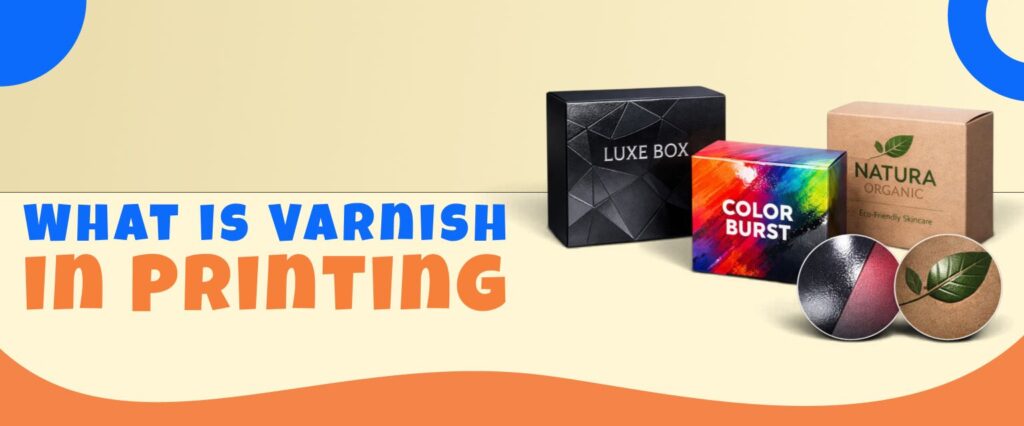
Varnish in printing is a clear and liquid coating that is used on printing material to enhance the quality. It adds shine and works as a protective layer for printed material that helps to protect papers from scratches, fingerprints and moisture damage.
Printing is not only about how ink and color are used. The finishing touch matters more in printing. Varnish plays that finishing role. It changes how a printed piece looks and feels and also changes how long that piece lasts. This blog breaks down everything you need to know about varnish in printing.
In this article, we will learn about the types, advantages, disadvantages and applications of varnish and much more.
What Is Varnish Exactly In Printing
Varnish is a transparent coating that is used on top of ink to finish the print and to protect the printed material. It is like a clear layer on paper to preserve and protect what’s underneath. Varnish coating on paper completely changes the look of the paper by adding shine.
It is usually made up of resins and solvents. Varnish has different types. Every type dries differently and looks different. Each type is used for two main things: one is to protect the surface from scratches, and the second one is to make printed material look better.
Some people use varnish in ink but it is not the same thing. Varnish is used as the finishing layer for the whole paper but ink only holds the image and text. It also makes printed material survive for a longer time.
Types Of Varnish In Printing
Varnish in printing has many different types. Every type works differently and gives different results. While choosing any type first check which one is best with you requirements.
Gloss Varnish
Gloss varnish is usually used in photos and marketing pieces as it adds high shine. This type of varnish makes colour look bold and glossy.
Matte Varnish
Matte varnish does not add shine. It is used to make printed material look classy and works well for understated looks. This looks soft and smooth.
UV Varnish
UV varnish printing is best for the protection of the printed material compared to other types. It makes paper hard and gives a durable finish.
Water-Based Varnish
This type of varnish is more eco-friendly than other as it is made with water instead of solvent and also dries faster than other types.
Tinted Varnish
Tinted varnish maintains transparency but adds slight colours during printing. This type of varnish changes the mood of the design without hiding it.
Satin Varnish
Satin varnish is a type that comes between gloss and matte and also adds shine without making printed material too flashy. It works for many printing jobs.
Varnish on boxes is also common. Brands use a varnish layer on boxes to make them survive longer. It is most commonly used for custom boxes. Where styles and looks help brands to make their product look appealing.
Spot Vs Flood: Applied Method
There are mainly two methods of varnish application. The final look and cost of printing will be based on which method you choose.
Spot Varnish
So what is spot varnish in printing? Spot varnish is a coating that is applied to a specific area of the paper instead of the whole paper like images, logos and on headlines.
Flood Varnish
Flood varnish is used on the whole paper edge to edge. It is usually used for the protection of the entire paper. This varnish is also a cheaper option than spot varnish.
Related Coatings Compared With Traditional Varnish
Varnish is not the only option. Some other options are also available with different results.
UV Coating
UV coating dries up fast under UV light. It offers strong protection and gives glossy, thick and hard finishing. But it is also expensive.
Soft Touch Coating
Soft touch coating creates a soft, smooth surface and gives a different look than other random coatings. Many people use it for Custom Printed Boxes and covers. Because it add expensive look.
Aqueous Coating
Aqueous is a water-based coating, more eco-friendly than solvent varnish coating, that dries up fast. It is less shiny than UV coating and provides a light protective layer.
Lamination Coating
Lamination coating is tougher and thicker than other coatings that are applied on printing materials. It offers the highest level of protection but is also more expensive.
How They Compare To Varnish
Traditional coating is simple and less expensive than varnish. It fulfills the basic requirements and shine needs. Choose according to the budget and printing requirements.
Advantages Of Varnish
- Varnish acts as a protective layer and helps the printing material to survive longer.
- It is less expensive than lamination and UV coating.
- Helps Custom Retail Packaging Boxes stand out on crowded retail shelves.
- This is water-based is also more eco-friendly.
Disadvantages Of Varnish
- Not as protective as lamination or thick UV.
- May crack or break on severely folded or creased surfaces.
- Gloss varnish may provide glare, reducing legibility in bright light.
- Not suitable for surfaces that are to be written or printed on afterwards.
Varnish Vs Lamination
Varnish is applied directly on the print. It dries fast because it is in liquid form also less expensive and provides moderate protection from scratches. This is suitable for short-term and low-budget projects.
Lamination is a plastic sheet that is usually placed over the printed surface. It offers long-term and stronger protection from damage, but it also costs more than varnish. This can also be applied Custom Gift Boxes to enhance presentation.
Application Of Varnish
Varnish is applied on printing material in different ways. The application of varnish is totally depends on the final goal and method. To make varnish usable for larger runs like magazines, it runs through an extra layer and press.
UV varnish uses a coating that dries in UV light, instantly turning it into a hard and glossy finish that can be used as varnish on boxes and book covers. Soft varnish uses a different coating that is only used on specific areas like logos and images.
Some varnish is applied through a different machine after printing. It is useful for the finish that can’t be done during the print.
Conclusion
Varnish plays a very important rule in printing. It protects printing material from scratches add shine or a soft look according to need. Every type of varnish serves a different job and purpose and also depends on the budget and design.
This is cheaper as compared to lamination. But it works for short-term and less heavy projects. Varnish can be used on brochures, book covers, or retail packaging; it remains cost-effective and enhances the visual appeal of the print.
If you’re planning your next print or packaging project and want expert guidance on choosing the right coating, Packlim can help you find the perfect finish for your needs.
FAQs
What Is Varnish Coating?
Varnish is a clear coating that is used on printing material to enhance the quality of printed papers. It adds shine and works as a protective layer for printed material that helps to protect papers from scratches and moisture damage.
What Is Spot Varnish In Uv Printing?
In UV printing, spot varnish is a coating that is applied only on specific areas. Then instantly dried under ultraviolet light. It creates a glossy surface, often used for logos, images and headlines on covers.
Which Is Better, Lamination Or Varnish?
Lamination and varnish both work differently. But the main difference is that varnish is less expensive than. Also, lamination helps printed material to survive long and butvarnish offers short-term protection.